
High-velocity indoor recreation carries inherent physical risks. Jumpers generate massive kinetic energy upon impact. Mitigating these forces requires verifiable safety infrastructure built directly into the facility. Operators face a distinct challenge. You must balance an engaging customer experience with strict liability mitigation. Injury prevention and regulatory compliance remain the top priorities for any successful facility. Basic posted rules do not prevent accidents on the court. You need a comprehensive evaluation framework to assess facility safety from the ground up. We will analyze structural equipment, operational protocols, patron preparation, and industry certifications. This guide provides the technical criteria needed to evaluate indoor jumping facilities effectively. We move beyond basic assumptions to look at the actual engineering, daily maintenance logs, and staff training protocols that keep patrons safe.
Compliance is Non-Negotiable: Verifiable adherence to international safety standards (such as ASTM F2970 or PAS 5000) is the baseline for evaluating any facility.
Equipment Quality Dictates Risk: The transition from outdated foam pits to advanced airbag systems, alongside redundant frame padding, significantly reduces severe injury rates.
Operational Oversight Equals Prevention: Even the best trampoline park safety equipment fails without strict court monitor-to-jumper ratios, waiver verification, and rigorous rule enforcement.
Zoning Mitigates Collisions: Strict separation of jumpers by age, size, and activity type is a mandatory structural feature for collision avoidance.
A safe facility actively prevents injuries through structural design and strict supervision. Success means maintaining low incident rates across all demographic groups. It requires zero catastrophic equipment failures during peak operational hours. Active hazard mitigation involves anticipating risks before they occur on the jumping surface. Safe parks do not rely solely on patron compliance to prevent accidents. They engineer safety directly into the physical layout of the building. Success criteria include immediate emergency response capabilities and documented maintenance routines. You measure safety by how effectively a park separates conflicting traffic and absorbs unexpected impacts. A well-designed facility guides patron behavior naturally through physical barriers and clear visual cues. Operators must track near-miss incidents to adjust their safety protocols proactively. This data-driven approach ensures continuous improvement in hazard reduction.
Regulatory bodies define the baseline for structural integrity and operational safety. ASTM International provides the ASTM F2970 standard, which dictates the design, manufacture, installation, and operation of court facilities. The International Association of Trampoline Parks (IATP) also issues strict guidelines for member facilities. These frameworks dictate material specifications, load-bearing requirements, and layout dimensions. You must verify a park's compliance through independent inspection certificates. Accredited third-party engineers conduct these rigorous inspections annually. They test spring tension, frame stability, and padding density using specialized equipment. Facilities must display current inspection certificates prominently near the entrance. Expired or missing documentation signals severe operational negligence. Inspectors also review the facility's daily maintenance logs to ensure ongoing compliance between annual visits. Meeting these standards is a legal requirement in many jurisdictions.
Operators navigate a realistic balance between thrill and safety every day. Advanced maneuvers attract patrons looking for high-energy recreation. However, uncontrolled acrobatics increase injury rates exponentially. Strict limitations protect both the patron and the business from severe consequences. Banning double bouncing prevents dangerous energy transfers that cause lower extremity fractures. Restricting somersaults limits spinal injury risks among untrained jumpers. You enforce these rules to maintain a controlled, predictable environment. Liability mitigation requires documenting every safety measure, from waiver signatures to maintenance checklists. A well-managed Trampoline Park delivers excitement without compromising structural security or operational control. Staff must intervene immediately when patrons attempt maneuvers beyond their skill level. This proactive intervention forms the core of effective risk management.
Exposed steel frames and springs present severe impact hazards to jumpers. High-density padding must cover all rigid structures completely. We evaluate padding based on thickness, foam density, and material durability. Closed-cell cross-linked polyethylene foam offers superior impact attenuation. It does not absorb moisture, harbor bacteria, or degrade quickly under heavy use. Vinyl covers must resist tearing and puncture from constant foot traffic. Seamless pad integration is a mandatory structural requirement. Gaps between pads and jumping beds cause foot entrapment and severe ankle injuries. Fastening systems, typically heavy-duty Velcro or industrial straps, must secure pads tightly to the steel frame. Shifting pads expose springs and create immediate danger zones. Maintenance teams must inspect these fastening points daily to ensure the padding remains locked in place.
Containment systems keep jumpers safely within designated zones and prevent falls to hard surfaces. Perimeter netting requires specific tension and height to function correctly. Loose nets fail to rebound patrons safely, acting as a trap rather than a barrier. Short nets allow high-bouncing jumpers to clear the barrier entirely. We analyze mesh size strictly during safety audits. Small mesh prevents finger and toe entrapment when patrons inevitably grab the netting. UV and wear resistance extend the netting lifespan, especially near windows or skylights. High-traffic zones require secondary containment layers. Redundant netting provides a backup if the primary barrier fails under a heavy load. Structural supports for netting must sit outside the impact zone. Jumpers should never contact rigid poles, even when the netting flexes to its maximum limit.
Dismount zones require maximum impact absorption for patrons attempting aerial maneuvers. Modern pneumatic airbags outperform traditional foam blocks across all safety and operational metrics. Foam pits present severe hygiene issues for indoor facilities. They trap dust, bacteria, sweat, and lost personal items at the bottom of the pit. Foam blocks degrade rapidly, reducing their impact-absorption capability and creating a false sense of security. Advanced airbag systems use dual-chamber technology to solve these problems. The top chamber yields softly to absorb the initial fall. The bottom chamber remains firm to prevent the jumper from bottoming out against the concrete floor. Airbags offer superior hygiene because staff clean the antimicrobial vinyl surface easily. Airbags provide consistent, predictable impact attenuation for every jumper. They are now the industry standard for safe dismount zones.
Patron attire directly impacts safety on the jumping courts. Park-approved grip socks are mandatory for all participants. Ordinary socks cause dangerous slip hazards on synthetic jumping beds. Grip socks feature specialized silicone traction patterns on the soles. The material blend prevents blisters and provides stability during rapid directional changes. Strict policies prohibit personal items on the courts. Patrons must completely empty their pockets before entering the jumping zone. Keys, coins, and phones become dangerous projectiles when launched from a jumping bed. Staff require the removal of all jewelry, watches, and fitness trackers. Physical readiness involves securing glasses with sport straps to prevent them from falling. Jumpers must tie back long hair to prevent entanglement in springs or netting. Athletic clothing must remain free of hazardous hardware. Studs, zippers, and metal buckles damage the jumping beds and cause severe lacerations.
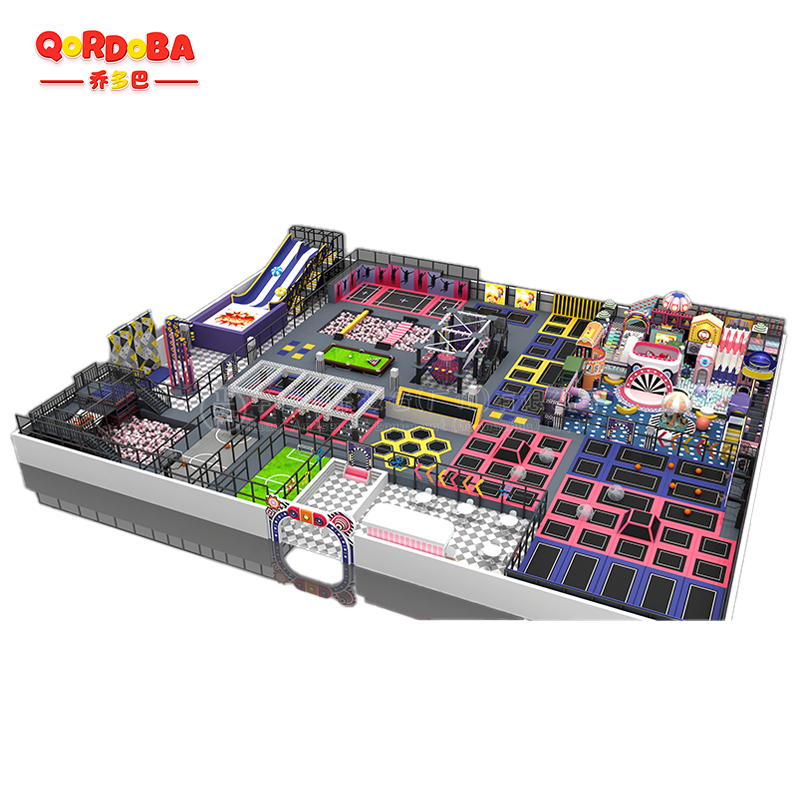
Size disparities cause the most severe collision injuries in indoor jumping facilities. A 200-pound adult transfers massive kinetic energy to a 40-pound child during a shared bounce. Dedicated toddler zones protect children under six years old from these forces. Separate areas accommodate adult and high-intensity jumping away from younger patrons. Physical barriers between zones prevent cross-traffic collisions and accidental wandering. Netting and padded walls enforce this separation structurally, removing the reliance on verbal warnings. Age-appropriate supervision ensures older children do not enter toddler zones. Zoning limits the variables a court monitor must track during their shift. It creates predictable traffic patterns and isolates high-risk behaviors to specific, heavily monitored areas. Facilities must enforce these zones strictly, regardless of family groups wanting to jump together.
Intelligent park layouts prioritize clear sightlines for all staff members. Staff must monitor all areas without visual obstruction to maintain safety. Structural pillars, high walls, and enclosed attractions create dangerous blind spots. We evaluate designs that allow 360-degree visibility from elevated monitor stations. Strategic placement of entry and exit points prevents bottlenecking during busy sessions. Crowded exits lead to accidental falls and collisions on the perimeter padding. Facilities must structurally eliminate the risk of bouncing exits. Jumpers must walk off the courts onto solid, padded ground rather than bouncing onto a walkway. Ramps and transition platforms manage traffic flow safely between different elevations. Clear signage directs patrons through the facility, reducing confusion and preventing unauthorized access to restricted zones.
Consistent maintenance prevents catastrophic structural failures during operation. High-quality Trampoline Park Safety Equipment requires daily, weekly, and monthly inspections. Staff log the condition of trampoline beds, springs, and safety nets meticulously. They check for frayed stitching, stretched springs, and torn padding before opening the doors. Deferred maintenance introduces severe risks to patrons. A single broken spring increases the load on adjacent springs, causing a rapid chain reaction of failures. Staff must spot signs of equipment fatigue immediately and take action. Damaged sections require immediate closure until maintenance teams complete the repairs. Operators must keep replacement parts on hand to minimize downtime and avoid the temptation to operate compromised equipment.
Standard Component Inspection Schedule
Inspection Frequency | Target Components | Key Indicators of Wear |
|---|---|---|
Daily | Jumping beds, frame padding, grip socks | Small tears, shifting pads, loss of traction |
Weekly | Springs, perimeter netting, airbags | Overstretched coils, loose tension, pressure loss |
Monthly | Steel frames, structural bolts, anchor points | Metal fatigue, loose hardware, rust or bending |
Annually | Entire facility structure | Third-party engineering compliance verification |
Strict access control prevents unauthorized entry to the jumping courts. Mandatory safety waivers outline the physical risks associated with the activity. Patrons must complete physical readiness assessments prior to entry. Staff verify waiver completion in the database before granting access. Color-coded wristbands serve as visual verification tools for court monitors. They confirm waiver status and enforce age-group zoning instantly. Wristbands also monitor time limits for each jumper. Expired wristbands signal staff to remove patrons from the courts efficiently. This system prevents overcrowding and ensures all jumpers acknowledge the safety rules. Front desk staff must check identification to ensure adults sign waivers for minors legally. Digital waiver kiosks streamline this process while maintaining secure, searchable records for liability protection.
Even premium equipment fails without proper supervision from trained staff. Industry-standard ratios dictate the number of staff to patrons on the floor. Peak hours require tighter ratios to manage high traffic and increased risk. Off-peak hours still demand minimum coverage to eliminate blind spots entirely. Court monitors require rigorous training before stepping onto the courts. They learn active scanning techniques similar to aquatic lifeguard protocols. Training covers conflict resolution, hazard identification, and crowd control. Monitors must hold current CPR and First Aid certifications. They act as the primary defense against unsafe behavior and rule violations. Management must rotate monitors frequently to prevent fatigue and maintain high vigilance levels throughout the shift.
Staff must enforce critical safety rules without hesitation or exception. Double bouncing transfers unpredictable energy and causes severe lower-body fractures. Monitors strictly prohibit this behavior, intervening immediately when patrons attempt it. Patrons may not sit or lie on active courts at any time. Resting jumpers become hidden trip hazards for active participants. Somersaults carry high risks for spinal injuries and face strict restrictions. Bouncing exits are strictly prohibited to prevent falls onto hard walkways. Staff maintain capacity limits for each jumping zone meticulously. Overcrowding leads to inevitable collisions and loss of control. Monitors follow a strict protocol for removing non-compliant jumpers. One verbal warning precedes immediate removal to maintain overall park safety. Consistent enforcement builds a culture of safety among regular patrons.
Incidents occur despite the most rigorous preventative measures. Facilities require robust infrastructure for immediate incident management. Accessible first aid stations must stock trauma supplies, splints, and ice packs. Clear evacuation routes allow rapid medical access for emergency responders. Documented emergency action plans guide staff during high-stress crises. Staff conduct regular drills for spinal injuries, fractures, and sudden cardiac events. Fast, coordinated responses mitigate injury severity and comfort the injured patron. Emergency readiness proves a facility's commitment to patron welfare. Management must review and update these protocols annually based on real-world incident data.
Secure the immediate area and halt all jumping activity in the affected zone.
Dispatch a certified First Aid responder to assess the injured patron.
Notify management and contact emergency medical services if the injury involves the head, neck, or spine.
Clear a direct path from the facility entrance to the incident location for paramedics.
Document the incident thoroughly, including witness statements and photographs of the equipment.
Installing top-tier safety gear requires significant upfront capital. This investment yields long-term operational stability and reduces ongoing costs. High-density padding and dual-chamber airbags resist wear under heavy daily use. They outlast cheaper alternatives by years, delaying replacement cycles. Premium materials reduce the frequency of replacements and the associated labor costs. Quality equipment minimizes downtime for repairs, keeping all attractions open and generating revenue. Facilities operating with superior gear maintain higher capacity limits safely. The initial expenditure directly supports continuous, safe operations. Cutting corners on safety equipment leads to frequent closures, higher maintenance costs, and increased injury rates. Smart operators view premium safety infrastructure as a core business asset rather than an operational expense.
Documented safety features directly influence insurance underwriting decisions. Providers assess risk based on structural design, equipment quality, and operational protocols. Robust waiver systems and rigorous staff training lower premium costs significantly. Independent inspection certificates prove compliance and reduce liability exposure during claims. Safety delivers strong returns through brand reputation and community standing. Parents trust facilities with visible, strict safety enforcement and clean equipment. Customer trust drives repeat visits, positive online reviews, and strong word-of-mouth marketing. Prioritizing safety protects the business from devastating litigation and forced operational closure. A single high-profile incident can destroy a facility's reputation permanently. Investing in safety is the most effective strategy for ensuring long-term business survival.
Request the facility's latest independent safety inspection report before booking large events.
Audit the condition of the safety padding and netting during a preliminary walkthrough.
Observe the court monitors to ensure they actively enforce rules and manage capacity.
Verify that the facility uses advanced airbag systems rather than outdated foam pits.
Check the daily maintenance logs to confirm staff inspect the jumping beds and springs regularly.
A: The most critical feature is the combination of high-density frame padding and active court supervision. Padding prevents blunt force trauma from exposed steel frames and springs. Vigilant staff prevent dangerous behaviors like double bouncing and collisions, which cause the majority of severe injuries on the courts.
A: Yes. Advanced pneumatic airbags provide consistent, predictable impact absorption. They do not degrade rapidly like foam blocks. Airbags are highly sanitary, easy to clean, and utilize dual-chamber technology to prevent patrons from bottoming out against the hard concrete floor.
A: Standard rules include mandatory grip socks, no double bouncing, and no sitting on the active courts. Patrons must empty all pockets and remove jewelry. Bouncing exits are strictly prohibited, and jumpers must stay within their designated age and size zones at all times.
A: Waivers legally inform patrons of the inherent physical risks and confirm their readiness to jump. Color-coded wristbands visually verify that a waiver is signed. They also help staff enforce age-specific zoning and track jumping time limits to prevent overcrowding.
A: Staff must conduct daily inspections of jumping beds, padding, and nets for immediate wear. Weekly checks focus on spring tension and airbag pressure. Accredited third-party engineers must conduct comprehensive structural inspections annually to maintain regulatory compliance and verify structural integrity.
A: Grip socks feature specialized silicone traction patterns on the soles. They prevent dangerous slips and falls on the smooth synthetic jumping beds. They also maintain hygiene standards and protect the equipment from damage caused by zippers, buckles, or dirt on regular footwear.
A: Industry guidelines generally recommend one court monitor for every 30 to 35 jumpers during standard operations. This ratio tightens during peak hours or in high-risk zones to ensure monitors maintain clear sightlines, eliminate blind spots, and enforce rules effectively.
