
The family entertainment center market offers high-yield potential. Yet, this active recreation sector carries heavy capital expenditure and substantial liability risks. Many prospective operators dive in without fully understanding the physical demands placed on the facility. Most early business failures stem from underestimating core infrastructure requirements. Poorly planned HVAC systems, inadequate ceiling heights, and miscalculated international freight costs drain startup budgets rapidly. Failing to secure proper liability insurance or lacking a demographic-driven business plan leads to operational paralysis.
To succeed, you need a highly structured evaluation framework. This guide helps you assess financial feasibility and secure the right funding avenues. It covers how to evaluate commercial-grade gear while maintaining strict safety compliance. You will learn how to mitigate operational risks, manage supply chain logistics, and optimize facility layouts before committing to a commercial lease or a binding franchise agreement.
Facility constraints dictate viability: A viable location requires 20,000 to 100,000 square feet, a strict minimum clear ceiling height of 18 feet (5.5 meters), high visibility, and specialized HVAC infrastructure to handle high-exertion environments.
Capital requirements extend beyond equipment: Total initial investment must account for hidden costs, including international freight planning, complex zoning permits, substantial insurance premiums, and working capital.
Vendor selection is a compliance issue: Sourcing indoor trampoline park equipment requires strict adherence to international safety standards (ASTM, CE, TÜV) rather than just aesthetic appeal or initial price.
Diversification and demographics drive profitability: Relying solely on jump time is a flawed model; sustainable parks profile their target customers to integrate high-margin secondary revenue streams like F&B, arcades, and premium party packages.
Finding the right building is your first major hurdle. A viable footprint generally ranges from 20,000 to 100,000 square feet. This broad size range depends entirely on your target market population and your desired daily guest throughput. Securing commercial zoning for family entertainment centers presents unique bureaucratic challenges. Municipalities often enforce strict parking ratio requirements based on maximum building occupancy. You might need one parking space for every 100 square feet of usable space, which quickly rules out otherwise perfect industrial warehouses. Noise ordinances can also restrict your operating hours if the building sits near residential zones or mixed-use developments.
Navigating local safety permits requires immense patience and architectural precision. You must secure fire marshal approvals for specific egress routes and emergency exit placements. Occupancy limits dictate exactly how many guests and staff members can safely inhabit the space at once. In many cases, you will need to commission a localized traffic study to prove your business will not overwhelm neighborhood intersections. Conditional use permits may take months to clear city council hearings. Factor this dead time into your pre-opening schedule.
Your facility needs high daily traffic counts to survive. Highway access or placement directly along main arterial roads is absolutely necessary. Families hauling multiple children will not visit locations that are difficult to find or hidden deep within industrial parks. Safe, well-lit parking lots are non-negotiable for your core family demographics. Poor exterior lighting deters parents from booking evening birthday parties or dropping off teenagers on weekend nights.
Visibility from the street significantly reduces your reliance on digital marketing spend. A prominent, well-branded building facade serves as a permanent billboard for your business. When negotiating a lease, pay close attention to signage rights. You want maximum allowable exterior signage to capture impulse visits from passing traffic. If the building is set back far from the road, ensure you have rights to install a highly visible monument sign at the street entrance.
Standard industrial buildings often lack the specific structural prerequisites necessary for active recreation. You need a strict minimum clear ceiling height of 18 feet, or 5.5 meters. This clearance is measured from the finished concrete floor to the lowest hanging roof obstruction, such as fire sprinklers, HVAC ducts, or lighting fixtures. This height prevents catastrophic head injuries during high bounces. Column spacing is another architectural factor. Wide column spans, ideally a 30-by-40-foot grid, allow for uninterrupted court designs and better sightlines for your safety monitors.
Structural load capacities must support heavy rigging equipment. If you plan to install ninja warrior courses, zip lines, or suspended obstacle elements, the roof trusses must handle the dynamic loads. The concrete slab must be thick enough to accept heavy-duty anchor bolts without cracking. A minimum four-inch reinforced concrete slab is standard. Spatial walk flow requires careful architectural planning to prevent bottlenecks. Design distinct, wide zones for check-in counters, digital waiver stations, and shoe storage. Guests should flow naturally from the entrance to the prep zones, and finally onto the jump courts without crossing paths with exiting crowds.
Standard warehouse cooling systems will fail spectacularly in this environment. High-capacity, high-exertion facilities generate massive amounts of body heat and moisture. You must address these specific HVAC demands upfront during the lease negotiation phase. Upgrading commercial air conditioning requires significant capital expenditure, often involving crane rentals to place new rooftop units. Active recreation spaces typically require one ton of cooling capacity for every 300 to 400 square feet, compared to standard retail which might only need one ton per 1,000 square feet. You will likely need specialized fabric duct socks to distribute conditioned air evenly across massive open spaces without creating localized drafts.
Without adequate cooling and dehumidification, humidity builds up rapidly inside the building. High indoor humidity creates dangerously slippery jump surfaces and accelerates equipment degradation. Steel frames rust faster in damp environments. Foam padding absorbs moisture, leading to mold and foul odors. Proper ventilation ensures guest comfort, keeps the facility smelling clean, and extends the lifespan of your physical assets.
Choosing your core business model dictates your operational future and financial obligations. Franchise models offer immediate brand recognition and established standard operating procedures. They provide access to vetted vendor networks, architectural templates, and proven marketing campaigns. However, franchises require hefty initial franchise fees and ongoing monthly royalty payments based on your gross revenue. You must also adhere strictly to their corporate brand standards, which limits your creative flexibility.
Independent ownership offers higher profit margins and total creative control over your facility. You avoid franchise fees entirely, keeping more cash in your operating account. The trade-off is significant. You must build your operational playbook, safety protocols, and brand identity entirely from scratch. Independent operators must also negotiate their own vendor contracts and build their own marketing infrastructure without corporate support.
Securing capital requires a highly detailed, bank-ready business plan. Commercial lenders expect localized demographic research and thorough competitive analysis. You must prove the local market population and median household income can sustain your projected attendance. Common funding avenues include SBA loans. These loans offer favorable interest rates and longer repayment terms but require extensive documentation and personal guarantees.
You might also explore specialized equipment financing to cover the cost of the physical attractions. This allows you to preserve cash for leasehold improvements and working capital. Private investor syndication is another viable route for raising substantial capital. Investors will heavily scrutinize your revenue projections, management experience, and risk mitigation strategies. Your financial model must account for seasonality, as summer months and school holidays generate vastly different revenue streams than mid-week school days.
Understanding the strict difference between hard and soft costs prevents devastating budget overruns during the build-out phase. Hard costs represent tangible assets and physical building modifications. Soft costs are intangible services and fees required to get the doors open. You must also negotiate Tenant Improvement allowances with your landlord to offset some of the hard construction costs.
Capital Expenditure Breakdown
Cost Category | Examples of Expenses | Impact on Budget |
|---|---|---|
Hard Costs | HVAC upgrades, concrete slab modification, bathroom expansions, physical attraction structures. | Highest capital drain; requires strict contingency funds for construction surprises. |
Soft Costs | Architectural blueprints, engineering stamps, municipal permits, legal fees for waiver drafting. | Often underestimated; delays in permitting can inflate these costs due to extended holding times. |
Working Capital | Pre-opening payroll, initial marketing blitz, insurance down payments, utility deposits. | Sustains the business during the initial ramp-up phase before cash flow stabilizes. |
Logistics | International shipping containers, customs duties, port storage fees, specialized rigging labor. | Highly variable; subject to global supply chain fluctuations and fuel surcharges. |
Moving massive steel frames and bulky foam across the globe is complex and expensive. International freight planning involves significant logistical challenges that can derail your opening date. Shipping containers full of heavy springs and bulky padding incur high transport fees and require specialized unloading equipment at your facility. You must build generous contingency timelines into your build-out schedule.
Customs delays can stall your project for weeks, leaving installation crews standing idle. Installation bottlenecks occur when materials arrive out of sequence. If the padding arrives before the steel framework, you must find secure, dry storage for massive amounts of foam. Work closely with experienced logistics brokers to track shipments, manage port fees effectively, and coordinate just-in-time delivery to your construction site.
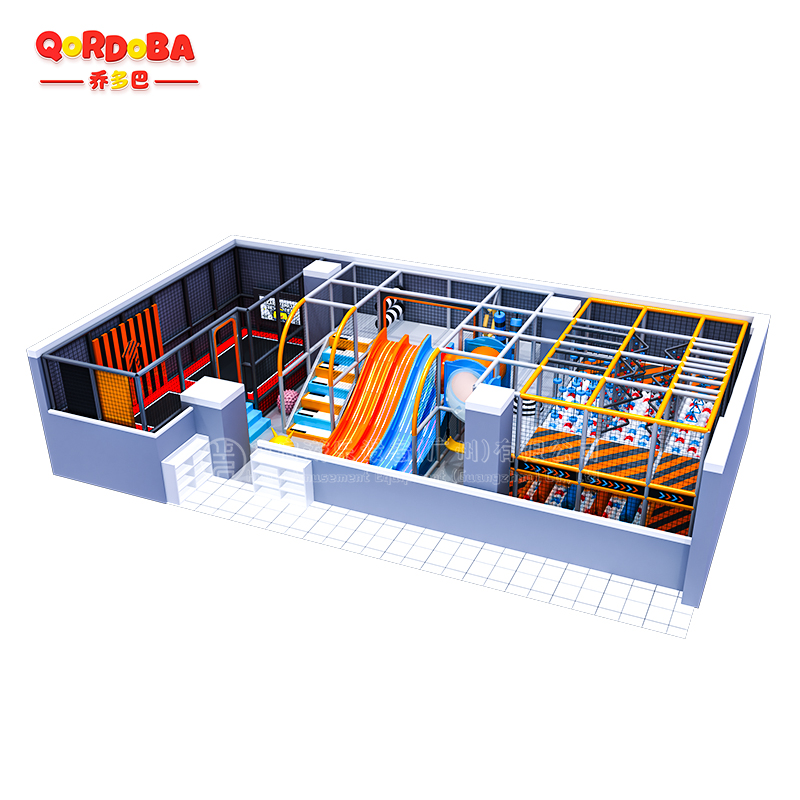
Vendor selection is strictly a compliance and safety issue, not merely a budgetary decision. You must vet manufacturers based on rigorous safety standards rather than just aesthetics or the lowest bid. Mandatory compliance with ASTM F2970 is absolutely non-negotiable. This international standard governs the design, manufacture, installation, operation, and maintenance of trampoline courts. If a vendor cannot produce verifiable ASTM, CE, or TÜV certifications, walk away immediately.
Scrutinize the material specifications provided by the factory. Look for thick, heavy-gauge galvanized steel that resists structural fatigue under constant dynamic loads. A standard specification is 80x80mm steel tubing with a minimum 3mm wall thickness. Spring tensile strength dictates both the bounce quality and the longevity of the court. Fire-retardant padding is required to pass local fire marshal inspections. Ensure the vinyl covers are highly resistant to tearing and fading. Never compromise on these baseline safety metrics to save money upfront. Cheap materials will cost you exponentially more in early replacement and potential liability claims when sourcing Indoor Trampoline Park Equipment.
A facility relying solely on massive fields of interconnected trampolines is an outdated model. This singular approach is highly susceptible to market saturation and rapid customer fatigue. Sustainable parks map their equipment selections to specific demographic profiles to maximize dwell time and repeat visits. Toddler zones featuring soft play structures generate morning revenue when older kids are in school.
Ninja warrior courses, warped walls, and interactive climbing elements attract teenagers looking for physical challenges. Dodgeball courts, jousting beams, and slam dunk lanes appeal to young adults and corporate team-building events. By diversifying your attractions, you maximize your return on investment and broaden your customer base. Modern facilities also incorporate high-tech gamification, using RFID wristbands to track scores across different obstacles, which encourages friendly competition and repeat visits.
Proper installation is just as important as the manufacturing quality of the equipment itself. Use manufacturer-certified installation teams rather than general third-party local contractors. Certified installers understand the specific tensioning requirements and ensure the structural integrity matches the stamped engineering plans. This approach also protects your liability coverage, as insurers prefer installations completed by factory-trained professionals.
Follow these standard installation phases to ensure compliance:
Verify the concrete slab thickness and structural integrity before drilling anchor bolts.
Erect the galvanized steel framework according to the stamped engineering blueprints.
Install the jumping mats and tension the springs evenly to prevent uneven wear.
Secure the fire-retardant safety padding over all exposed steel and spring connections.
Conduct a final load test and safety inspection with the manufacturer representative.
A standard commercial warranty should comprehensively cover mats, springs, and steel frames. Understand the expected lifecycle of high-wear components before you sign the purchase order. Springs and safety pads will require replacement long before the steel infrastructure shows any signs of wear. Negotiate a spare parts package with your initial order so you have replacement items on hand from day one, preventing court downtime.
Securing comprehensive liability insurance is one of your biggest operational hurdles. The active recreation industry faces high premium costs due to the inherent injury risks associated with jumping and climbing. Underwriters will heavily scrutinize your business operations, facility layout, and management experience before issuing a policy. Demonstrating strict, documented safety protocols directly impacts your premium costs and coverage limits.
You must show proof of rigorous staff certifications, detailed employee training manuals, and daily safety checklists. Operating a clean, well-lit facility with compliant Trampoline Park gear reduces your perceived risk to insurers. Install a comprehensive CCTV camera system that covers every inch of the jump courts. High-definition video footage is your best defense against fraudulent injury claims. A pristine safety record is your strongest leverage for negotiating lower renewal rates year after year.
Every single guest must sign a legally binding liability waiver before entering the active courts. You need a robust, state-specific digital waiver system. This software should integrate directly into your Point of Sale terminals and online booking platform. Paper waivers are highly inefficient, prone to loss, and difficult to store securely for the required legal duration.
Establish strict front-desk protocols for verifying the identity of minors and their legal guardians. A waiver signed by a minor or an unauthorized chaperone is legally useless. A poorly executed waiver process leaves your business entirely vulnerable to devastating lawsuits. Consult with a specialized local attorney to ensure your waiver language holds up in your specific jurisdiction and covers all new attractions you add to the facility.
Consistent, documented maintenance prevents accidents and extends the functional life of your equipment. Implement rigorous requirements for daily, weekly, and monthly inspections. Floor staff must physically check for torn mats, stretched or missing springs, and loose padding every single morning before the doors open. Document these inspections meticulously in a digital maintenance log that managers sign off on daily.
Replacing high-wear items before they fail is a necessary, non-negotiable operational cost. Do not wait for a spring to snap or a mat to tear before ordering replacements. Pay special attention to foam pits and airbags. Foam blocks break down over time and create hazardous dust, while airbags require daily pressure checks. Proactive maintenance maintains a defensible safety record and protects your guests from preventable harm.
Your floor staff are your first and most important line of defense against injuries. Court monitors require specialized training for effective crowd control and conflict resolution. They must know how to enforce safety rules firmly without alienating guests or ruining the fun atmosphere. Mandatory CPR and First Aid certification is essential for all active floor personnel, and you should run regular emergency response drills.
Labor cost modeling requires careful attention to historical foot traffic patterns. You need heavy, overlapping staffing during peak weekend hours, school holidays, and rainy days. Conversely, you must scale back your labor force aggressively during quiet weekday mornings to protect your profit margins. Cross-train your staff so front desk cashiers can safely monitor courts or host birthday parties when needed.
Running a high-volume modern facility requires specialized software. Evaluate Point of Sale systems designed specifically for family entertainment centers. The software must handle real-time capacity management to prevent dangerous overcrowding on the courts. It should seamlessly process online party bookings, manage recurring memberships, and track digital waivers tied to customer profiles.
Integrated wristband or RFID systems streamline the check-in process drastically. These technologies allow guests to transition quickly from the front desk to the attractions, reducing lobby wait times. Sell branded grip socks directly through the POS. Grip socks are a mandatory safety item that also serves as a massive, high-margin secondary revenue stream. Efficient technology improves the guest experience, reduces labor strain, and provides valuable operational data for targeted marketing campaigns.
Commission a localized demographic feasibility study to validate your target market before signing a lease.
Secure a specialized entertainment insurance quote early to understand your ongoing liability costs and coverage limits.
Draft a comprehensive, data-backed business plan to present to potential lenders or private investors.
Finalize your equipment layout, spatial walk flow, and HVAC engineering plans before signing a property letter of intent.
Establish a relationship with a specialized attorney to draft your state-specific digital liability waivers.
A: Securing funding typically relies on SBA 7(a) loans, specialized equipment financing, or private equity syndication. Lenders require a data-backed business plan showing localized demographic research and competitive analysis. You must demonstrate clear revenue projections, show proof of management experience, and hold enough working capital to survive the initial opening phase before cash flow stabilizes.
A: The strict industry requirement is a minimum of 18 feet, or 5.5 meters, of clear height. This measurement is taken from the finished floor to the lowest hanging roof obstruction, such as HVAC ducts, fire sprinklers, or lighting fixtures, to prevent severe head injuries during high bounces.
A: The core audience consists of families with children aged 6 to 15. Highly profitable facilities design specific zones to capture a broader audience. This includes dedicated morning toddler areas, challenging ninja courses for teenagers, and interactive sports zones for young adults and corporate team-building events.
A: Heavy-duty galvanized steel frames can last for decades if properly maintained in a climate-controlled environment. High-wear items experience significant stress. Depending on daily foot traffic, components like springs, jumping mats, and safety padding typically require replacement every one to three years to maintain strict safety standards.
A: The industry standard for a standard facility ranges from 20,000 to 40,000 square feet. This allows enough room for diverse attractions, party rooms, and adequate walk flow. Mega family entertainment centers can scale up to 100,000 square feet to include arcades, bowling, and extensive food service operations.
A: Operators must carry a comprehensive insurance portfolio. This includes General Liability to cover basic premises risks, and Participant Liability specifically for injuries occurring on the attractions. You also need Workers' Compensation for your staff and Commercial Property insurance to protect the building and physical assets.
